Posts

From my bubble to yours

Image
These are strange and overwhelming times. We are under stress, collectively as a nation. We are also under stress in our little bubbles. I t is easy to be pulled apart by the pressure of home-school a class of ungrateful students, or working in a church role where you are expected to collate all manner of online resources in a short space of time. Or the anxiety producing loneliness of isolation. Let me offer into this space one practice I have used for a year or so now and have found very helpful. It will work on your kids too! You could use this on a walk outside or around your house.  Notice 5...4...3...2...1 5. Notice five things that you can see. *Describe them out loud if you like (e.g. green spiky leaf, black hairy spider)  4. Notice five things that you can hear. * (e.g. the screech of a seagull, my heartbeat) 3. Notice five things you can feel. (e.g. the carpet under my feet, the breeze on my face) 2. Notice five things you can smell. (e.g. th...

Kia tau te rangimārie

Image
Kia tau te rangimārie Peace be with you  We live in anxious times. The spread of the Covid-19 coronavirus is causing the whole world to become an unsettled and unpredictable place. This has an effect on our children. I recently heard of a school that has had to ban the children from playing 'Coronavirus Tag', which is as it sounds. If you get tagged, you have the virus and you will die. Needless to say, this was rather anxiety inducing for all concerned.  We can be proactive in addressing this anxiety, especially as some children will carry their concerns close to their heart without verbalising it.  Here are a couple of tips and resources that you might find helpful: 1. Slow down: This link will lead you to a series of colouring pages produced by Strandz for Advent this year. Download the ' rangimārie ' or 'peace' page and photocopy off enough for one each. During your Sunday morning programme or after-school club give the children time in silence ...

In the Footsteps of Jesus

Image
A 1st Century stone path in Bethsaida, where Jesus walked the streets Understanding the daily life of Jesus helps us to discover who he really was. Context puts flesh on bones, and breathes life into the gospels. There are many great resources out there to help us to dig into the context of 1st Century Palestine. Here are some of our favourite free resources: Modern Photos of Israel/Palestine Annette took these photos during her visit in 2011. Free to download and use in PowerPoint or printed out to show small groups of children. We would be grateful if you could acknowledge Scripture Union New Zealand.  Links to great websites: A virtual tour of Israel Bible Places Great images of reconstructions of the temple in the time of Jesus Free photos of modern Israel A basic interactive map of Israel with photos A free app which gives you a virtual tour of Jerusalem and the temple. Works offline!  A couple of great Youtube clips of the Temple i...

The Journey to Jerusalem

Image
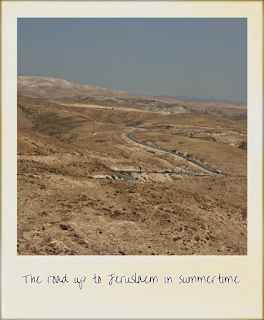
The season of Lent may not be familiar to all of us. It was certainly not a tradition I grew up with. But in the past couple of years I have grown to appreciate the journey that leads to Jerusalem. It gives me time to process and reflect. Take the opportunity to explore Lent with the children in your church and community. It might be one simple practice that you pick up.  Our blog has a variety of resources for the Lent and Easter season: - Intergenerational services  - An Easter story to share as a family or children's programme  - Links to resources, articles and images  You can find them all here! We will also be posting about great resources and ideas via our Facebook page so make sure you follow us.   We also recommend you check out these websites for a whole library of great resources and links. Look no further: Strandz  Kidsfriendly 

These stones...

Image
Reminders of God’s Faithfulness In Joshua we read that God saved the Hebrew people by leading them through the Jordan River. They found themselves safely on the other side. The LORD then told their leader Joshua to instruct the leaders of the twelve tribes to pick up a stone each and carry it back to camp. Joshua used these twelve stones to create a memorial. We read,  “In the future, when your children ask you, ‘What do these stones mean?’  tell them that the flow of the Jordan was cut off before the ark of the covenant  of the Lord. When it crossed the Jordan, the waters of the Jordan were cut off.  These stones are to be a memorial to the people of Israel forever.”  Joshua 4:6-7 These stones were a physical reminder of a spiritual moment. Every time their children saw them it acted like a prompt. The pile of stones created an opportunity for their family to talk together about the past and God’s faithfulness.  What are your ...

Sand and Stone

Image
I recently ran the evening devotions for an intergenerational camp, and it was wonderful to see people of all ages worshipping, exploring the Bible and praying together. So, I thought I would share these with you to pick up and use, or adapt to suit your own situation.  This resource is two 40 min sessions, suitable for all ages. It is based on Jesus' story of the wise and foolish builders, found int Matthew 7. This would work well for a weekend church camp or it could be adapted for a Sunday morning service.  Sand and Stone: Matthew 7:24-29 is one of Jesus’ most well-known stories. Two builders, two foundations, two houses. And the point of the story? The one who hears Jesus’ words and puts them into action is called wise. This resource includes reflections on the story of the wise and foolish builders, small group activities, key questions and stations to explore. It's all here for you to pick up and use! All you need: Service outline (two sessions) - The wh...

Leap to flame...

Image
‘We read under the eye of God until the heart is touched and leaps to flame.’ Dom Columba Marmion These words provide a beautiful picture of what reading the Bible can be. We read in the presence of God. We read until God's words burst to life, like a bonfire on a cold winter’s night. What an exciting approach to the Bible, one that can inspire our children as well as all ages.  God wants to speak with our children through the words in the Bible. Dom Columba Marmion is talking about an ancient way of reading the Bible called Lectio Divina. This method involves reading the words slowly and thoughtfully, working through four steps. The four steps are: lectio (reading), meditatio (meditatio), oratio (prayer) and contemplatio (contemplation).  When I use this method with children I phrase it this way: - Read - Reflect - Respond - Rest Here's what happened on one of our children's camps.  __________________________________________...